Discover Iceland / Northern lights
The northern lights
When the sky
comes alive.
When to come, where to stand, how to read the forecast and how to photograph them. Everything you need to see the aurora in Iceland.
What you need
Dark. Clear. Active.
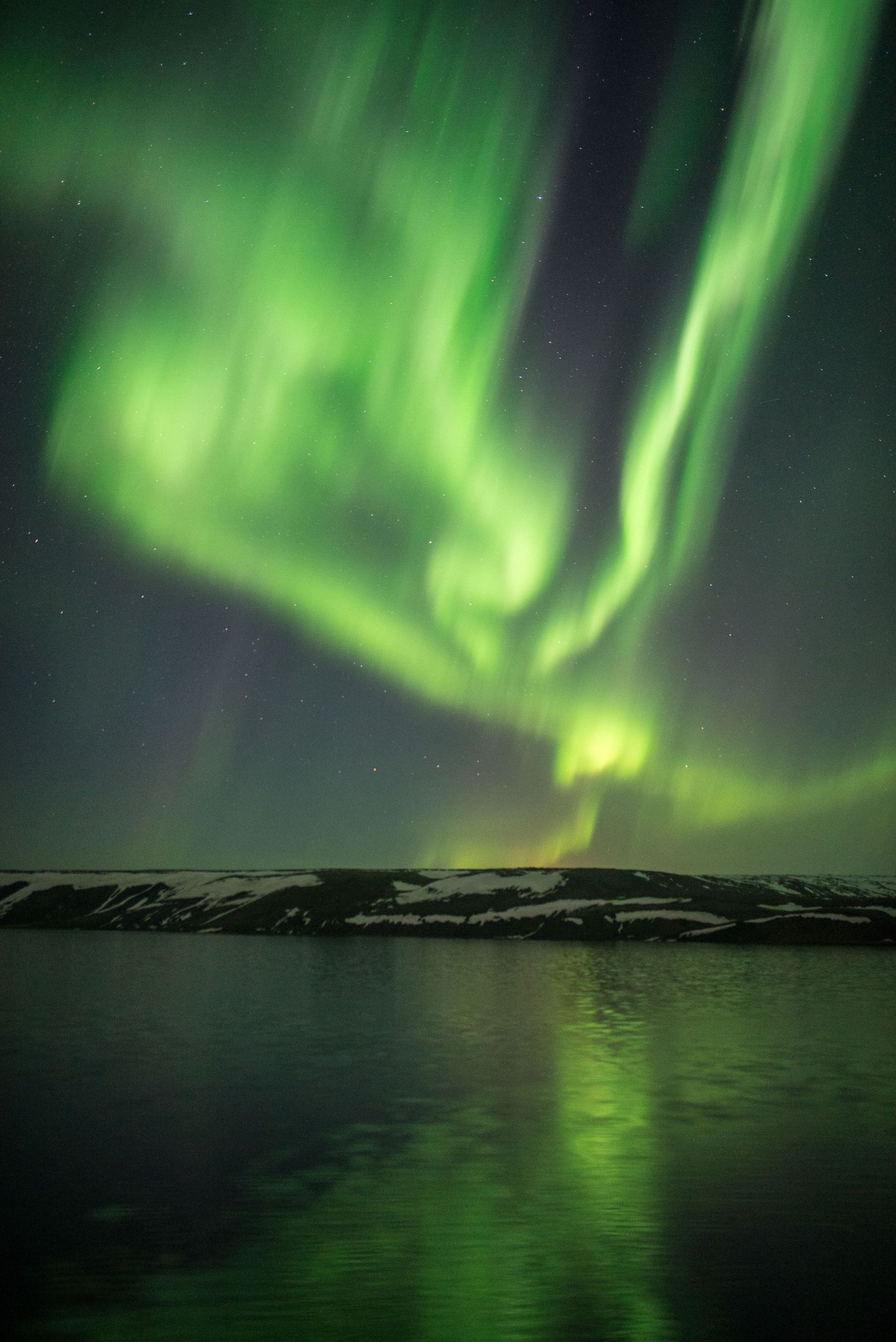
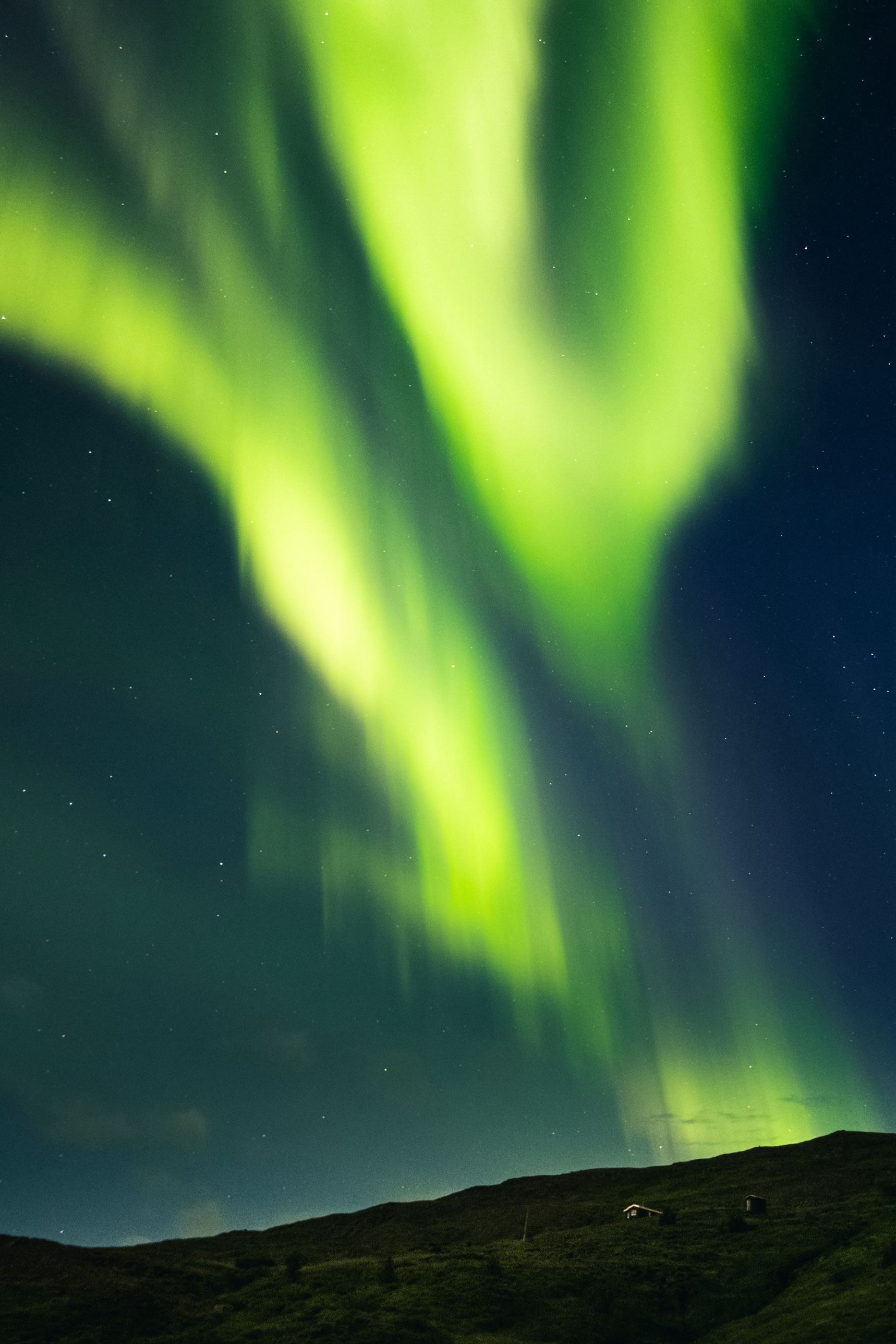
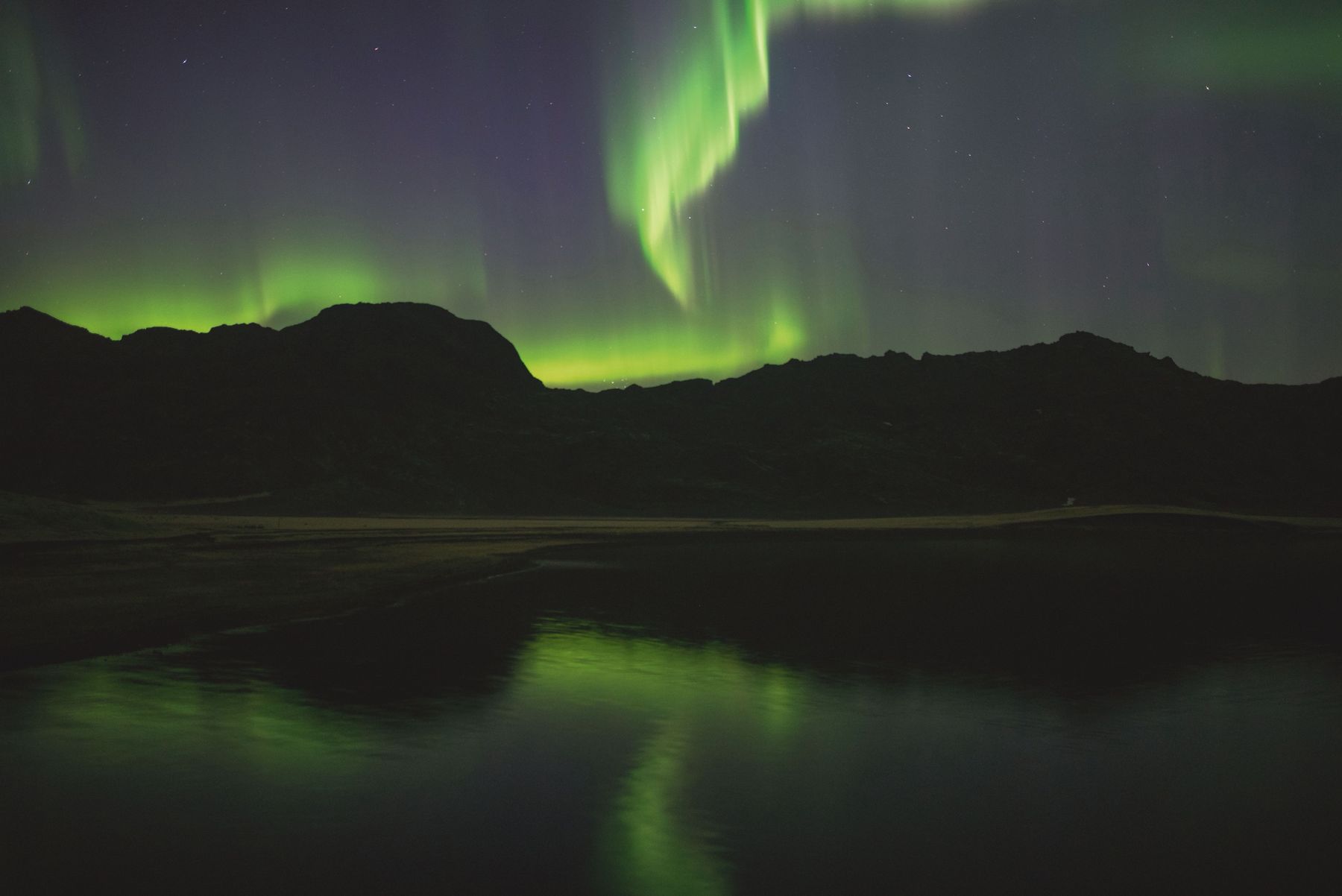
The northern lights happen when particles from the sun hit the upper atmosphere and make it glow, mostly green. Iceland sits right under the band where this happens most, so the lights are overhead on many nights. You just need three things to line up:
- Darkness. From about September to April. In summer the midnight sun hides them completely.
- A clear sky. Cloud is the most common reason people miss them, far more than a quiet sun.
- Solar activity. Some nights are quiet, some are spectacular. Even a modest display can be beautiful away from town lights.
The science
Why the sky glows.
The sun sends out a constant stream of charged particles, the solar wind. Earth's magnetic field steers some of them towards the poles, into a ring called the auroral oval.
Iceland sits right under that ring, which is why the lights are overhead on so many dark nights.
The colours
Why mostly green?
When the particles hit the upper atmosphere, oxygen and nitrogen give off light. The gas and the height decide the colour.
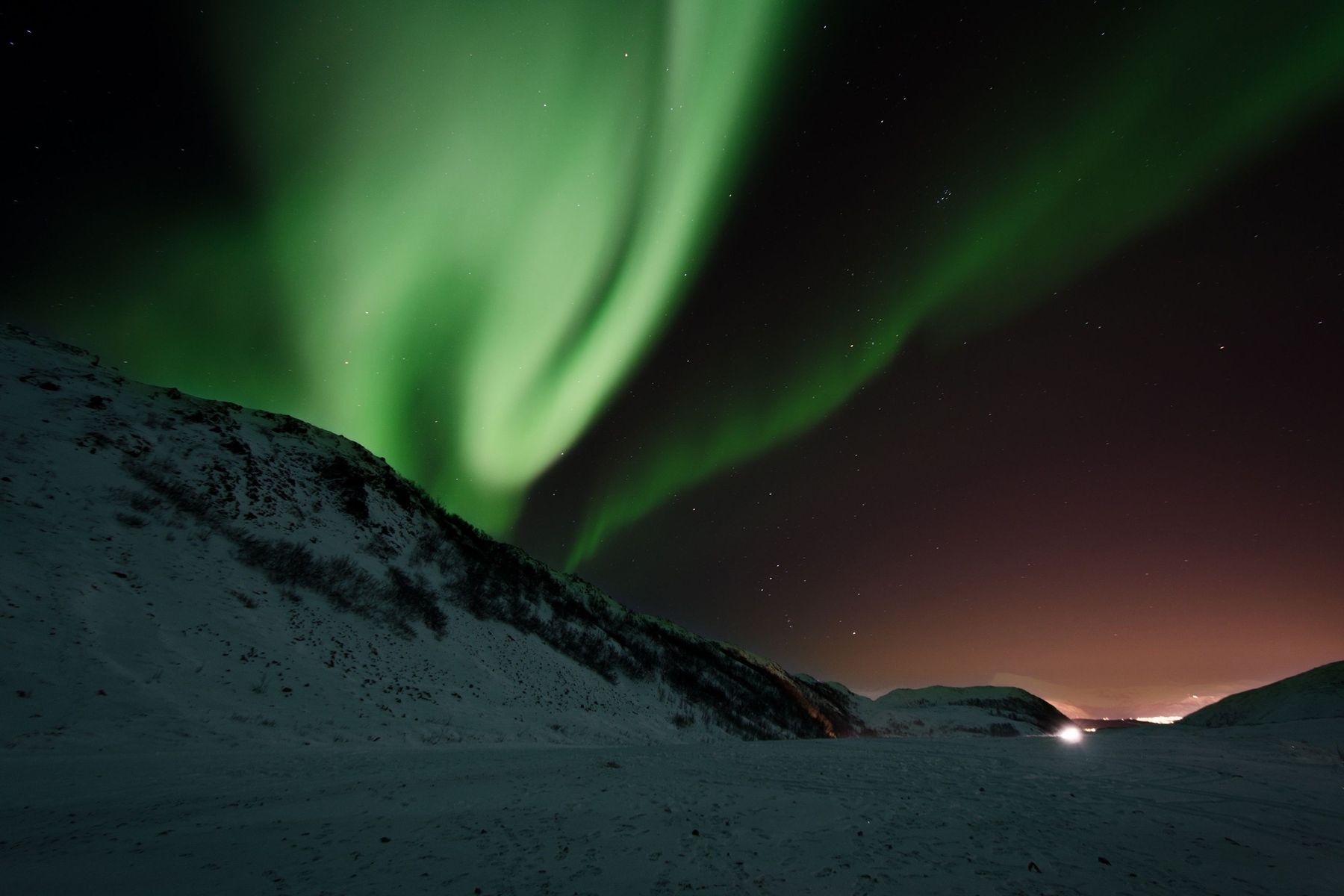
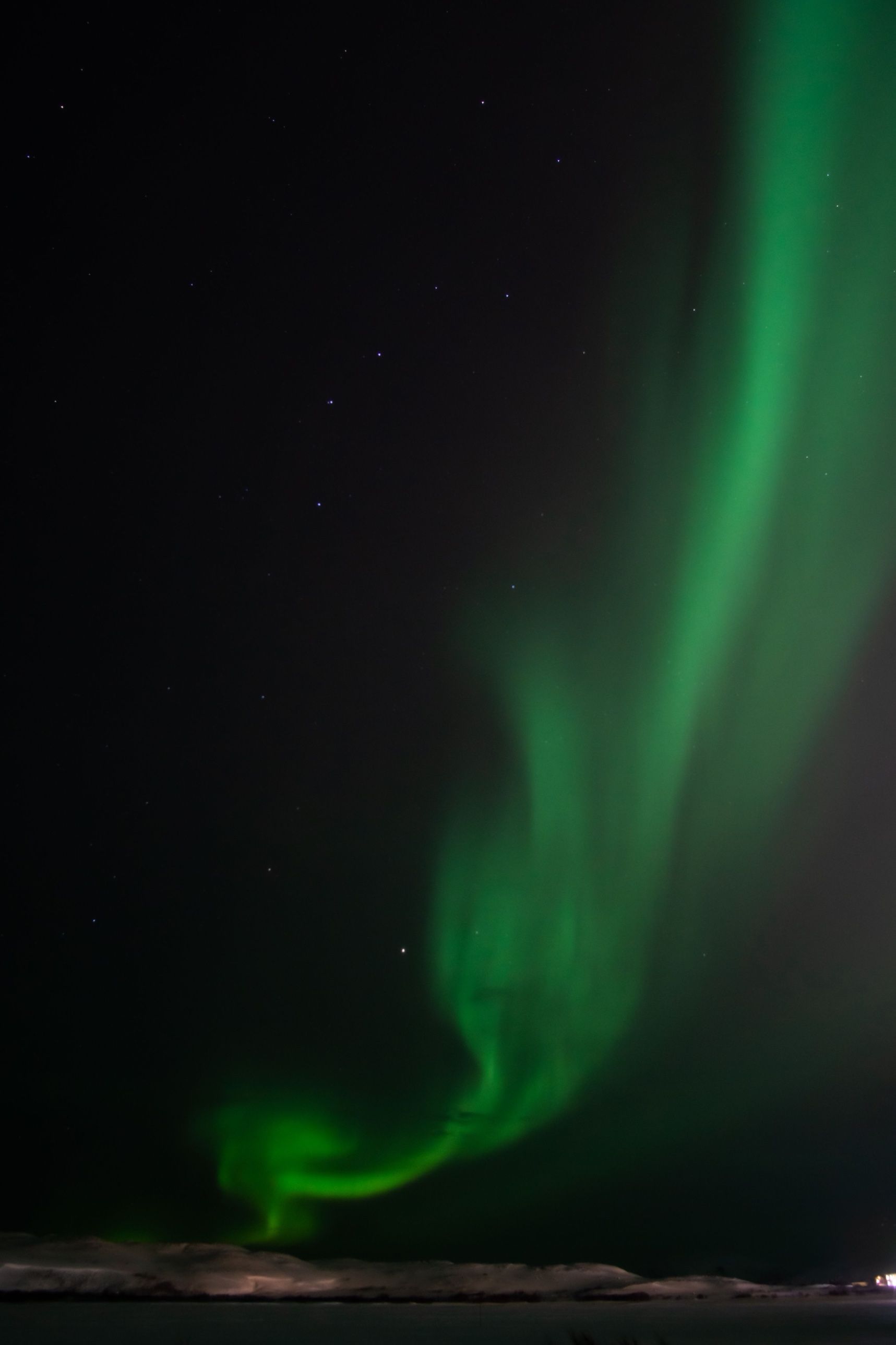
Green, from oxygen at 100–240 km, is the one you will see most. Red, purple and blue appear in stronger displays.
When to go
The season and the hour.
Late August to mid-April, with the longest nights from November to February. September, October and March are good bets: the nights are long enough, and the weather and roads are often kinder than in midwinter.
- Best hoursAbout 9 pm to 2 am, though they can appear any time it is dark.
- MoonA dark, moonless week shows faint displays best; a full moon lights the landscape.
- Stay longerThree or more nights in the season gives you far better odds.
The forecast
How to read the aurora forecast.
Check two things every evening, in this order.
1. Cloud cover
- The Icelandic Met Office (vedur.is) publishes an aurora forecast with a cloud map for the whole country.
- Look for the white, cloud-free patches and head there.
- Cloud often clears on one side of the island while the other stays covered.
2. Aurora activity
- Activity is shown on a scale, often the Kp index from 0 to 9.
- Around 3 or higher is a good night; lower values can still show up in a dark spot.
- Forecasts are a guide, not a promise. Step outside and look.
Apps and alert services can wake you when activity rises. Many hotels in the countryside offer an aurora wake-up call too.
Where to watch
Anywhere dark.
You do not need a special place, just a dark one with a view north and no lights nearby. These are some of the best bases.
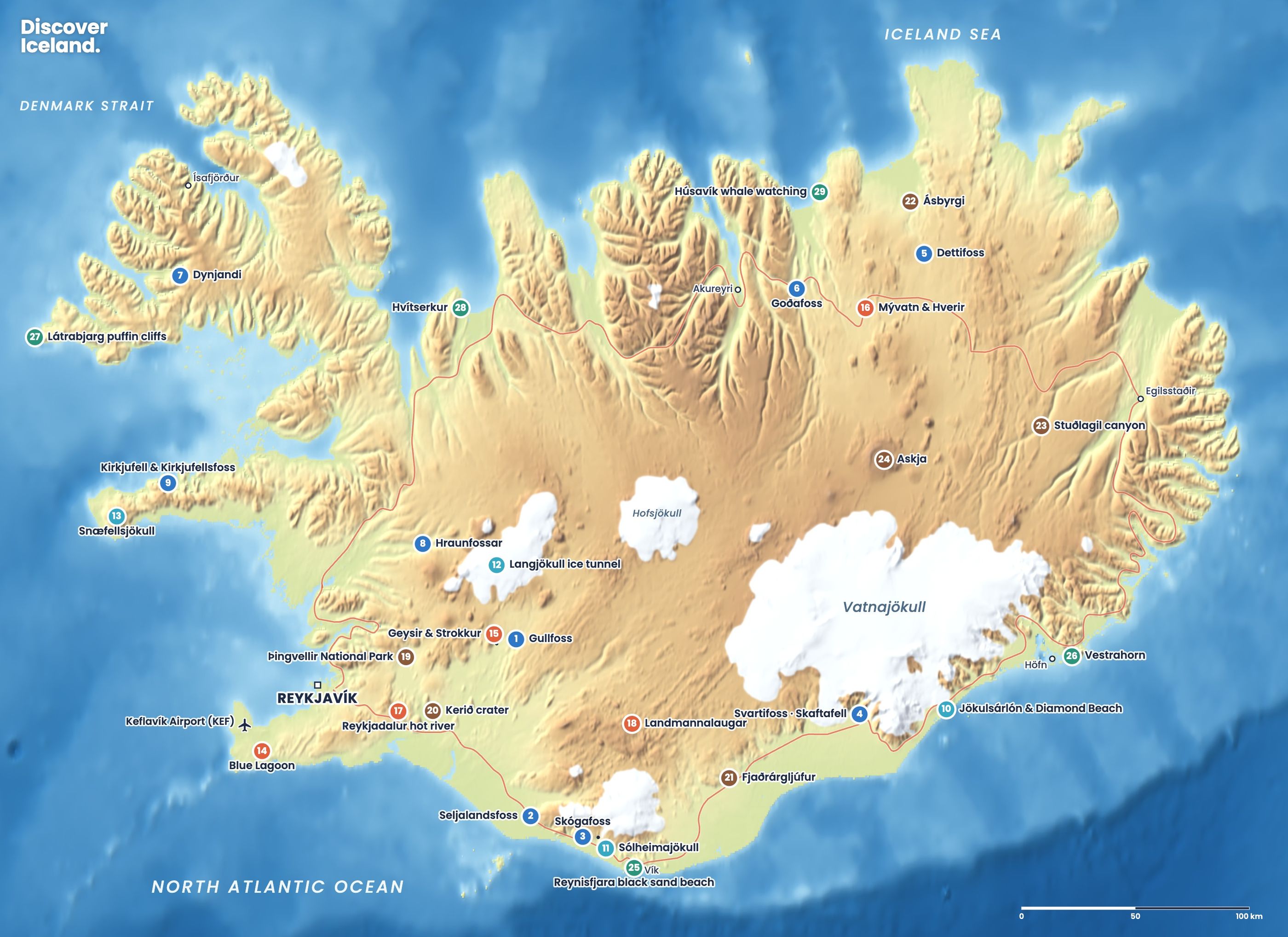
Tap the map to open it full size.
Near Reykjavík
- Þingvellir National Park, 45 minutes away and very dark.
- The Golden Circle countryside around Laugarvatn and Flúðir.
- Grótta lighthouse, at the edge of town, for strong displays.
South Coast
- Farm stays around Hella, Hvolsvöllur and Vík.
- Jökulsárlón, with the aurora over the icebergs.
- Black beaches like Reynisfjara, from a safe distance.
Snæfellsnes
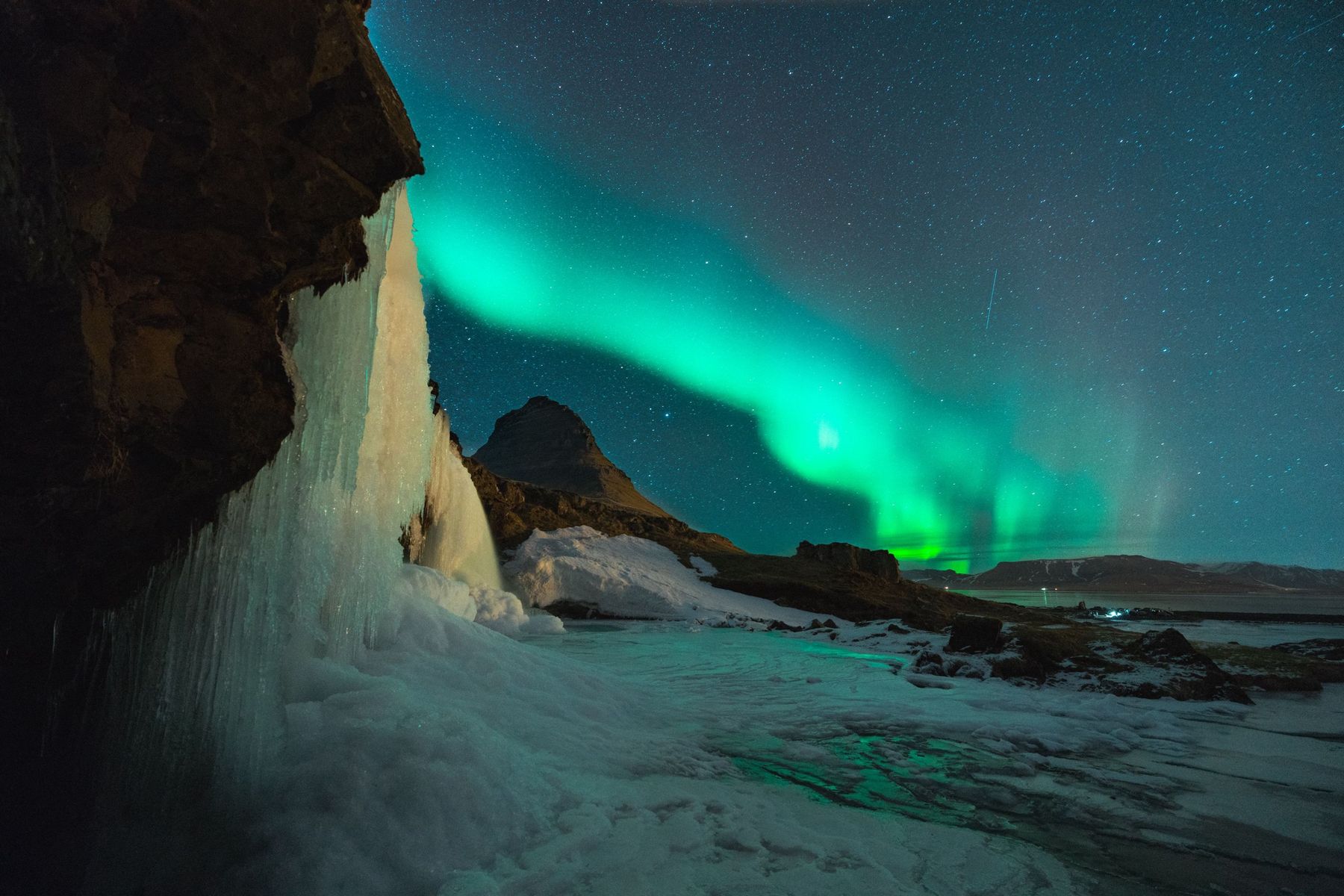
- Kirkjufell and Kirkjufellsfoss, the classic photo.
- Fishing villages with dark skies all around.
The north
- Lake Mývatn and Akureyri, often clearer and colder.
- Fewer people, long winter nights.
Tours or on your own
Chase them your way.
With a car and a clear forecast you can go on your own: drive somewhere dark, park safely and wait. In winter a tour can be the safer choice, because guides know where the clear skies are and you do not have to drive icy roads at night.
- Self-driveFree and flexible. Never stop on the road itself; use a proper parking area.
- Bus or minibus toursLeave Reykjavík in the evening; many offer a free retry if you see nothing.
- Boat toursSail out of Reykjavík harbour, away from the city lights.
Photographing the aurora
Camera and phone settings.
Camera
- Manual mode, on a tripod.
- Widest aperture, ideally f/2.8.
- ISO 1600, up to 3200 for faint lights.
- Shutter 5–8 s for fast lights, 10–15 s for slow glows.
- Manual focus set to infinity before dark.
- Shoot RAW; white balance around 3500–4000K.
Phone
- Night mode on, exposure 10–30 s.
- Use the main lens, not ultra-wide or zoom.
- Flash off.
- Rest the phone on something steady and use the timer.
- Keep still until the photo finishes.
Stay safe
Winter nights, done right.
- Dress for standing still. Warm layers, a hat, gloves, warm boots. You may wait an hour or more.
- Check the roads. Look at road.is before you drive, and turn back if conditions get worse.
- Park properly. Never stop on the road to look up. Use a lay-by or car park, with your lights off once parked.
- Mind the coast. Stay well back from the water on black beaches, day or night.
Questions
Northern lights FAQ.
When is the northern lights season in Iceland?
Roughly from late August or September to mid-April, whenever the nights are dark enough. In summer the midnight sun keeps the sky too bright to see them.
What time of night are the northern lights best?
Most displays happen between about 9 pm and 2 am, but they can appear any time it is dark. Plan to wait, and check the sky every so often.
Can you see the northern lights from Reykjavík?
Sometimes, during strong displays, but city lights wash out weaker ones. A short drive out of town to somewhere dark makes a big difference.
Do I need a tour to see the northern lights?
No. With a car, a clear forecast and a dark spot you can go on your own. Tours help in winter if you would rather not drive on icy roads at night, and many offer a free second try if you see nothing.
How many nights should I plan to see the northern lights?
Give yourself several nights. Cloud is the biggest obstacle, and a stay of three or more nights in the dark season gives you far better odds than one.
Can I photograph the northern lights with my phone?
Yes. Use night mode, the main lens, no flash, and rest the phone on something steady while the photo is taken.
The aurora guide
Discover Iceland: Northern Lights
Our full guide to the aurora is coming soon: forecasts, dark-sky spots by region, gear, photography and the best winter routes.